



Maitake
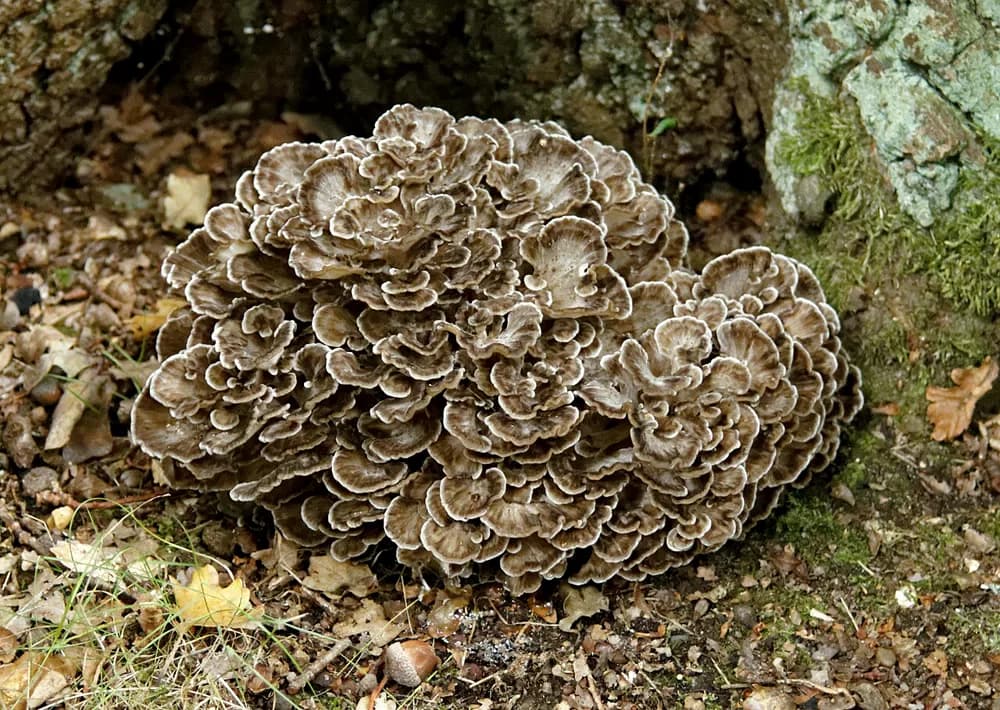
Maitake, the dancing mushroom, grows in large clusters at the base of trees. Prized in the kitchen and in tradition, it is a rich source of beta-glucans.
Grifola frondosa
- 01
What maitake is
Grifola frondosa forms fan-shaped clusters and is fully edible. For supplements the fruiting body is extracted to obtain a concentrated dose of beta-glucans.
- 02
Traditional use
In Japan maitake was prized both as a delicacy and as a tonic for overall balance and vitality.
- 03
What science studies
Research on maitake focuses on its beta-glucan, known as the D-fraction, and on metabolism. It is a food ingredient, not a medicine.
- 04
Key compounds
1,3/1,6 beta-glucans dominate, with a characteristic structure (the D-fraction).
Where science sees potential
- immune-system support
- carbohydrate and fat metabolism
What studies have shown
Nanba H., Kobe Pharmaceutical University (Japonsko), 1990-te
maitake grifolan and D-fraction – activation of immune cells
Kodama N. et al., 2002, J. Med. Food (Japonsko)
maitake D-fraction and the immune response
This concerns research on the mushroom and its compounds, not a claim that a food supplement treats disease. Many findings come from laboratory or smaller studies.
FAQ
- What is the D-fraction?
- It is the name for a specific beta-glucan extract from maitake that is being researched.
- Can you eat maitake?
- Yes, it is a tasty edible mushroom; we use a concentrated fruiting-body extract.