








Chaga and oxalates: take care with your kidneys
Chaga is rich in oxalates. Find out why that matters, who is at risk and how to take chaga safely.
3 min read

Chaga and oxalates: take care with your kidneys
This is a topic that often gets skipped when people talk about chaga – and yet from a safety point of view it may be the most important one. Chaga is rich in oxalates, and that comes with a specific caution for the kidneys. Let's explain it calmly and clearly.
What oxalates are
Oxalates (oxalic acid and its salts) are natural substances found in many plants – spinach, rhubarb, chard, nuts and cocoa. On their own they are not a “poison". The problem arises when the body takes in too much of them: oxalates can bind with calcium and form crystals that build up mainly in the kidneys (oxalate kidney stones and, in extreme cases, kidney damage).
Why this matters with chaga
Chaga is one of the richest natural sources of oxalates. For a healthy person, an occasional cup of tea is not a problem. The risk arises with high doses and long-term, uninterrupted use – especially in concentrated forms.
The medical literature also contains a documented case in which excessive, long-term chaga use was linked to kidney damage in a person with a predisposition. It is an isolated case, but it is a reason to take the topic seriously rather than ignore it.
Who is most at risk
Extra caution is advisable especially for:
- people with kidney disease or reduced kidney function,
- people prone to kidney stones (especially oxalate stones),
- people with gout or disorders of oxalate metabolism,
- those who already eat a diet rich in oxalates (lots of spinach, nuts, cocoa).
If you belong to any of these groups, only add chaga after talking to your doctor.
How to take chaga safely
For a healthy person, one simple principle applies – sensibly and in moderation:
- Don't exceed the recommended doses. More is not better.
- Drink enough water. Good hydration helps the kidneys.
- Consider a “course and break" approach instead of taking large doses non-stop for years.
- Keep an eye on your total oxalate intake from food, not just from chaga.
- If in doubt, consult your doctor.
Is this a reason to be afraid of chaga?
No. It is a reason to respect moderation. Chaga is a valuable mushroom and, for most healthy people, it is fine in sensible doses. The key word is “sensible" – along with knowing that, unlike some other mushrooms, there is a specific reason not to overdo it.
Chaga at Tradicína
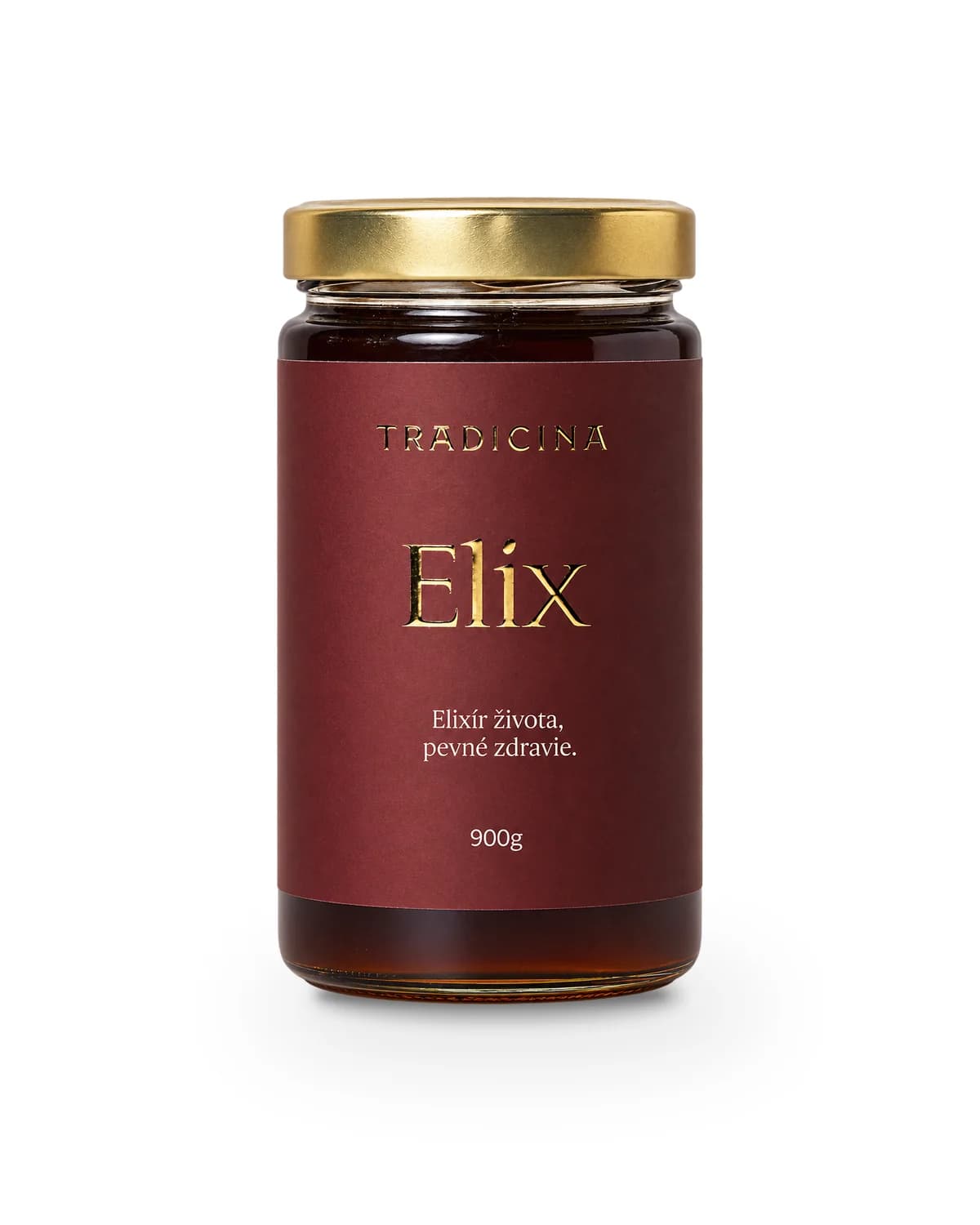
In the daily blend ELIX, chaga is one of several ingredients in a carefully considered ratio – not a concentrate of pure chaga in an extreme dose. Stick to the recommended dose on the pack (1.5 spoons) and consult your doctor if you have kidney disease.
Note: stir ELIX into a lukewarm liquid (max 38 °C), never into hot coffee.
Frequently asked questions
Is chaga dangerous for the kidneys? Not for a healthy person in sensible doses. The risk arises with high doses, long-term use or existing kidney disease.
How much chaga is “too much"? There is no universal number – the key is not to exceed the recommended doses and not to drink huge amounts of concentrated extracts for years without a break.
Should I drink a lot of water? Yes, good hydration helps the kidneys cope with oxalates.
Summary
Chaga is rich in oxalates, which can bind in the kidneys when taken in excess. For a healthy person in sensible doses this is not a problem, but with kidney disease, a tendency to kidney stones or long-term high doses, caution and a word with your doctor are in order. Take it in moderation, drink enough and consider breaks.
Want chaga in a balanced blend? Take a look at ELIX.